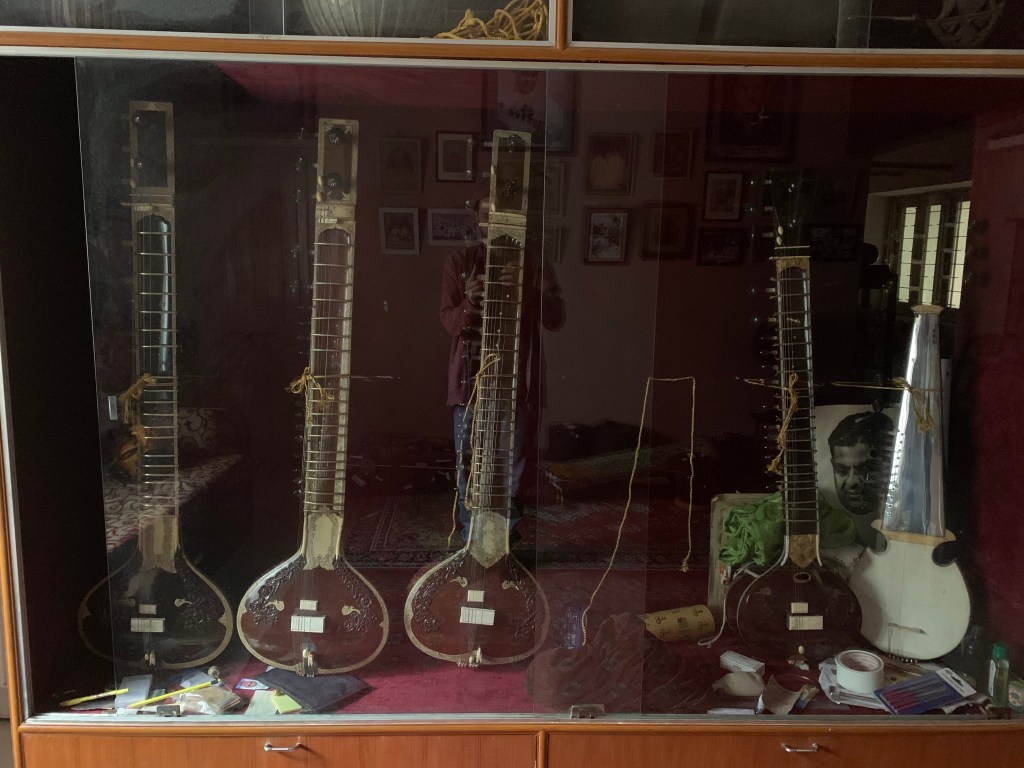
The main objective of my 2019 Arts Council DYCP Grant was to travel to India to develop my sitar practice with a master musician. I had been studying and progressing on sitar in the UK, alongside my other creative projects since 2008. I was conscious that I did not want to waste the time of a master musician, so I spent 12 years taking care of the basics and becoming fluent in raga-based traditions. In 2019 Jonathan Mayer introduced me to sarod master, Ustad Irfan Muhammad Khan, while he was touring the UK. I was so struck by his unique sarod style and the distinct repertoire he was performing. I was also fascinated by the history of his gharana, the Lucknow Shahjahanpur Gharana. So I went to study with him in Kolkata, in January 2020.
Ustadji took me back to basics so that over the years to follow I would develop into an exponent of the performance style of the Lucknow Shahjahanpur Gharana. I was introduced to the three streams of repertoire running through the gharana, the Lucknow stream, the Shahjahanpur stream, and the Kalpi stream. I was taught the importance of stillness — no unnecessary head moving or shaking of the instrument. I was taught the fundamentals of building improvisations out of todas, as per the gat-toda, or tantra baj, style of the gharana.
After spending two months in Kolkata, attending class 6 days a week, some times twice a day, the time came for the next stage of my creative research in Rajasthan. Having arrived an aspiring student of sitar and Hindustani music, I left with a new sense of purpose and direction. I boarded the train north as a student of the Lucknow Shahjahanpur Gharana.

 Dr Pete Yelding