April 2019
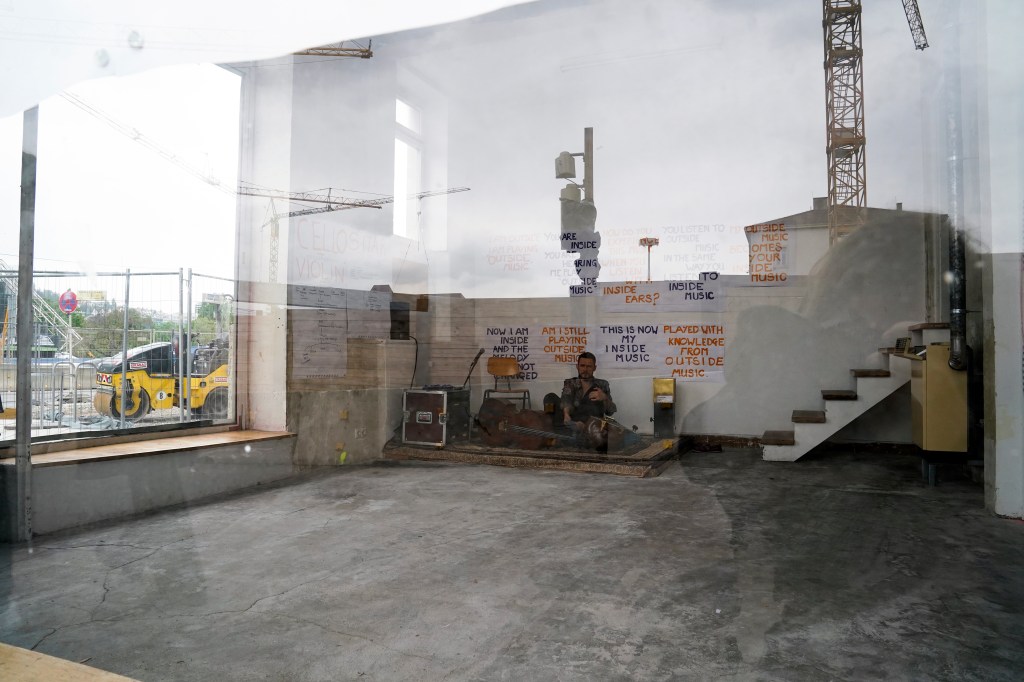
This was a residency at a disused commercial premises in Stuttgart, organised by Freie Tanz und Theaterszene, in which artists were invited to spend a month exploring their conditions of work in one way or another.
My plan for this residency was to use the premises as a practice space, to rehearse and compose material, and explore ways of communicate to the public: divesting from a Eurocentric musical imagination, musical genealogies, and the social experience of working as a cellist and sitarist descended from Showmen of Romani origin.
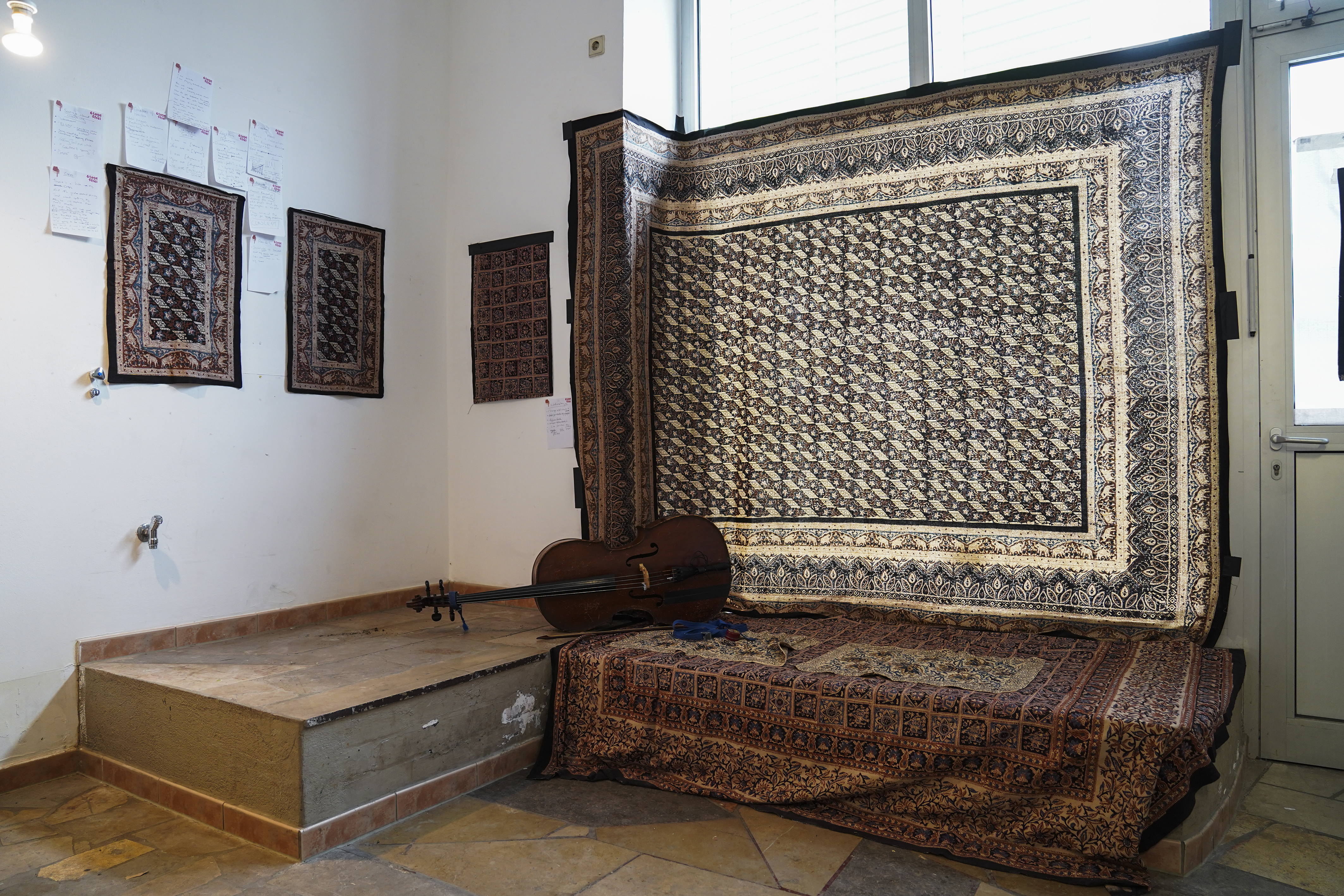
I arrived at the premises in Stuttgart after travelling by train from London, with my cello, sitar and luggage. It was 8th April, International Romani Day. The space had two rooms, a smaller room and a large room. I immediately started to dress the smaller space, which would be my practice room. I borrowed several sheets of fabric, which I covered the windows, walls and some of the floor, turning this cold commercial space into somewhere that felt more familiar. The larger space would be where I present at the end of the month.
After leaving my equipment at the premises I went to explore the city and was struck by how visible, but unacknowledged, the Roma population was in the city. This initial observation stayed with me throughout the residency, in which my days were split between working in the space and walking around the city. On my walks I would go and talk to some of the Romani musicians playing in the street, sometimes just complementing their playing and sometimes discussing my family history.
Half way through the residency I returned home, to London, for a prior commitment. Upon returning to Stuttgart 5 days later the city felt completely different. The green spaces in which many of the Roma population were inhabiting had been covered in fresh soil and the Roma population had gone. Boards for elections had also gone up everywhere. Coincidentally I noticed a sign on the metro, discouraging people from giving money to beggars. The beggars were illustrated in such a way to imply they were Rom. It was as though there had been a violent cleansing of the city and what felt initially like a place that at least tolerated Europe’s largest ethnic minority had revealed its hostile colours. I felt a need to bring this sense into the work I was doing.
I decided that I didn’t want to continue only practising in the safe space of the artist residency premises, so instead of just going out for walks, I would join the people on the streets and spend parts of the day practising outside. That is until, after a few days, I was confronted by the Police and advised to follow the strict rules of the city for buskers, or else…
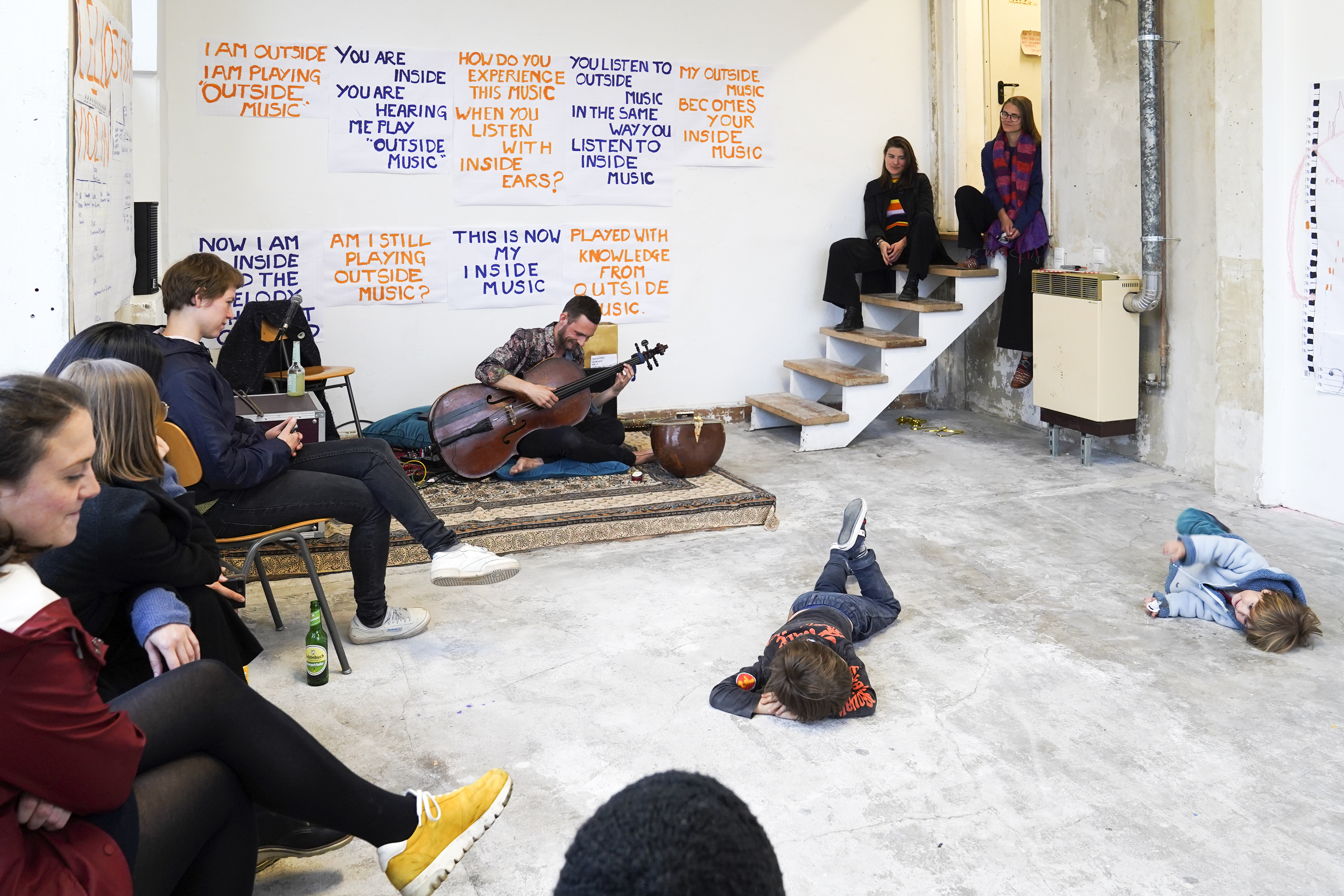
So I returned to the premises and felt compelled to start representing on paper, with posca pens, and on the walls with chalk, some of the ideas about Eurocentric imaginations and racist imaginations in music that contribute to the othering and marginalising of minoritised people. I drew distinctions between the mercator projection that squashes Africa and the equal tempered scale. I illustrated with diagrams the way in which melody works in Ragas as fluid motion, compared to the blocky motion of equally tempered melody. I presented, as lyrics and diagrams, some of the concepts around decolonised musical imaginations in the work of Kofi Agawu. I presented my family’s genealogy alongside the genealogy of the cello. I wrote about my experience of the city’s treatment of the Roma population and my experiences with German police.
For the final sharing I put all this work on display, attached to the wall. I gave a brief lecture about the work and an introduction to raga theory, then gave a performance of songs on cello and voice, and ragas on sitar.
Photos by Daniela Wolf


 Dr Pete Yelding